
(AsiaLIFE, December 2015)
Viet Cong fighter Be Tu came of age in barbaric conditions after being captured in 1968. Now a grandmother, she tells Lorcan Lovett her incredible tale of resilience and determination. Photo by Vinh Dao.
At an age when young women are finding their place in the world and realising their potential, Be Tu lay shackled in an oppressive, sweltering pit.
It was the winter of 1973, still scorching on the island of Con Son, and another year of disease, malnutrition, torture, and most vitally, survival, awaited the 25-year-old Viet Cong fighter.
She had been on the brink of death for almost six years, many of her friends had succumbed, and unless a turn of events allowed for her release these coming months would more than likely end her living nightmare.
“It was hell in the normal life,” Be says in Vietnamese, before curving her mouth into a resilient smile. “I never thought I would die. I never thought of giving up. All my thinking was that I felt hate more and more.”
67-year-old Be has retained her good looks, those high cheekbones and piercing eyes, as she sits in her living room in Saigon’s District 7. She has brought out monochrome pictures, four medals, and painful memories of the past.
Born into a family of farmers in the Mekong province of Tien Giang, Be witnessed the execution of her neighbours during the 60s as war ripped through her village, killing her uncle and only brother.
“I felt I had to do something to fight against the enemy. I did not feel scared because I saw many terrible things. It made my heart stronger. The only thing I felt was that I hated the enemy so much, there was no space to be scared.”
In 1965 Be began guiding guerrilla fighters through her province then delivering messages between local resistance groups. Her competence was soon recognised in Saigon where she continued her work.
By 1967 she was using the guise of a factory worker to discreetly advise colleagues how to fight the enemy. During that fall, rebel cells in the south received weapons and training in preparation for the Tet Offensive planned for 30 January 1968.
In the build up to this pivotal event, Be had some close scrapes. She once injured a few enemy soldiers after throwing a grenade as they chased her through the city. Nobody was killed, she says. Then her comrade accidentally set off a grenade when training.
Be cared for the injured from the incident at a hideout in Hoa Hung market. Hospital was out of the question, with the US army investigating any suspicious wounds.
One man crumbled underneath the pain and fled to the hospital where he was swiftly interrogated. Unaware, Be and three comrades returned to their breached spot with guns and supplies on 7 January 1968.
She was captured, handcuffed and a bag was thrown over her head. Then she was driven to 8 Nguyen Binh Khiem, which is now used to host parties and corporate conferences.
“They did not let me go out of the car normally. They kicked me and I fell down in the street so my lips bled and one of my teeth was broken. They immediately hit me and bit me a lot.”
Four men took her to a room, she recalls, and stripped her. They beat her breasts with a bamboo stick until the flesh was black, then poured watery shampoo into her mouth and stamped on her bloated stomach until she vomited.
Next came the electrocution. The torturers targeted sensitive areas of Be’s body and on top of the pain, she says, was a young girl’s feeling of humiliation at having been exposed in this way.
“There were many times like that but I never spoke a word,” she says. Sometimes her knuckles were beaten with a baton, other times her hands were tied behind her back and she was raised off the ground for a few minutes.
Her guards, whose desperation and work hours grew as their side fought in the Tet Offensive, were relentless in their attempt to retrieve the whereabouts of important figures.
The torture was relentless in the first month; by the third month it was once every five days. During this time they raised her from the ground and the rope slackened. She fell head first from the ceiling and woke up 10 days later at Cho Quan Hospital where she spent the next five months recovering.
Over the next year she was incarcerated in the city, enduring sporadic days of torture and interrogation. Next her enemy began offering her a way out if she switched sides. Equally defiant during this mental torment, Be was eventually transferred to Con Son prison.
She says those initial two years in the city were manageable compared to the next four.
“The worst time of my life was in Con Son. Everything was very terrible. There was not enough medicine, nothing to eat.”
French colonists used the island as a penal colony decades earlier, reserving the ‘tiger cages’ for Vietnamese dissidents caught up in the brutal system.
Be and up to four other women shared one of these two metre wide holes that had just enough length to lie down. In the wet season guards would sprinkle them with quicklime, burning their skin and eyes. In the dry season they mixed the quicklime with water.
Be would refuse to salute the guards in their signature style, or when they asked her to sing, she’d shout at them, and so they further targeted her as her scars attest.
Each prisoner had a wooden box for a toilet and each was given a can of water a day. The women saved some water, Be says, to wash themselves when they were menstruating.
When they were allowed to shower, the young helped the elderly and had little time for themselves. Flies crawled over the meager rations of rice, occasionally given with shrimp sauce, and only a serious injury, self-inflicted or at the hands of the guards, had the possible outcome of a vegetable in their diet.
“After eating there were some worms, like parasites, that came in our stomachs and went from our noses. We did not have enough water to wash our bodies -that caused lice and other insects. So many people died in the tiger cages because of the lack of medicine.”
Prisoners faced beatings for talking to each other in the city, but if there was one redeeming aspect of Con Son, it was that the old and young could share their knowledge.
“I can say that prison is just like my school. In that very terrible place I learnt so many things and grew up fast.”
As the years went by, friends began to perish. Five were buried on the island. In 1970 a US congressional delegation visited the prison and after a tip-off an aide for the group, Tom Harkin, broke from the tour and found the cages.
His pictures of the brutalised prisoners were published in Life magazine that summer, gaining world notoriety and triggering the release of hundreds. Then in January 1973 the Paris Peace Accords was established, and a prisoner exchange was included in its aim for the war to finally be settled.
Be says the prison manager wanted to transfer her and a few other political prisoners into the common criminal category so they would be exempt from the exchange.
She wore her fingerprints down on the concrete and pulled faces in the pictures to prevent her details being logged. Finally she was released on 5 March 1973.
“When I was coming to the final place I saw from the airplane windows to the ground a very big flag of Vietnam. I felt very touched by this and then just passed out. I was very lucky to be released and go back to the city and have children. My friends died there and would be lonely forever.”
Be returned to find her boyfriend had married. She rejoined the battle until victory in 1975 and then married herself, becoming a manager at Ben Thanh market and enjoying family life with her three children.
“Of course I had lots of nightmares when I slept about the torturing and planes from the US army, but step by step it is over a little bit and when I feel bad I try to find something to work, listen to music, try to forget.”








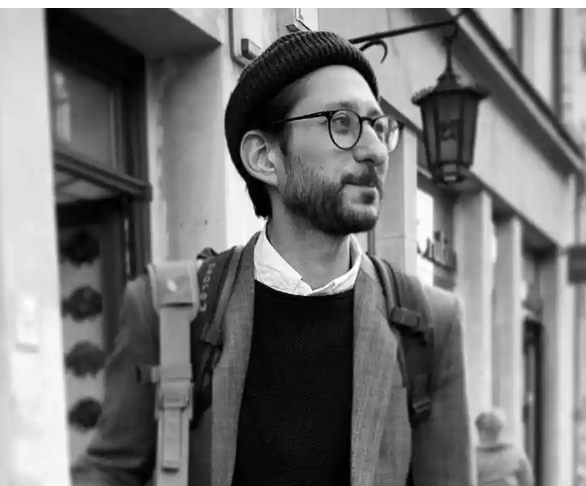





 Lorcán Lovett