(AsiaLIFE, February 2016)
A charity in Hoi An gives some of the poorest youngsters in Vietnam the skills they need for high-flying careers in the hospitality sector. With a new base in Saigon on the cards, Lorcan Lovett talks to its founder, Neal Bermas, about the inspiring work at STREETS International.
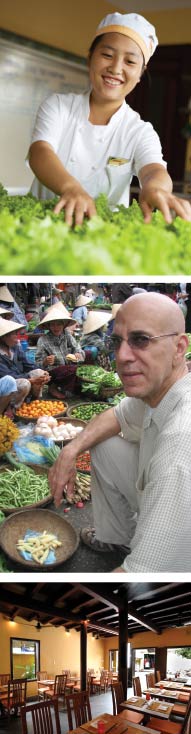
Lifelong traveller and hotel consultant Neal Bermas was wearily familiar with the face of poverty by the turn of the millennium, but there was something about the children of Saigon that left an indelible mark on him.
“When I first came to Vietnam there were still poor kids on the streets begging for food,” he recalls. “There were groups really begging and that touched me; there was something very vulnerable and compelling about those kids.”
Bermas speaks with a quiet, modest composure that suits a man of such notable accomplishments. It’s difficult to tell his age: the entrepreneur “stopped counting” after 55.
What’s more certain are the hundreds of lives from Sa Pa to Saigon that he has helped transform.
The native New Yorker has enjoyed a successful career spanning about 30 years in the hospitality sector. He has owned restaurants, lectured at colleges and worked for hotel groups such as Meridian, Sheridan and the Walt Disney Company.
Bermas visited ‘street kitchens’ on his travels – projects that pull youngsters out of social deprivation through restaurant work – and, while admiring the intentions of these charities, he realised that an even more gutsy approach could see trainees swapping shifts in local eateries for careers encompassing world-class hotels.
“I was intrigued with the idea of taking this ‘street kid’ concept started by a lot of really good hearted people, and adding another level of professionalism and expertise, so one could be more ambitious in the type of training you gave to kids,” he says.
In 2007, Bermas formed STREETS International, the vessel in which he has poured positive change into a country that still fascinates him to this day.
The initiative launched its training centre and 80-seat STREETS Restaurant Café in the tourist-laden town of Hoi An seven years ago, after Bermas had contacted colleagues and friends in the States to devise a curriculum. Since then it has produced over 150 graduates, with a new class beginning every nine months.
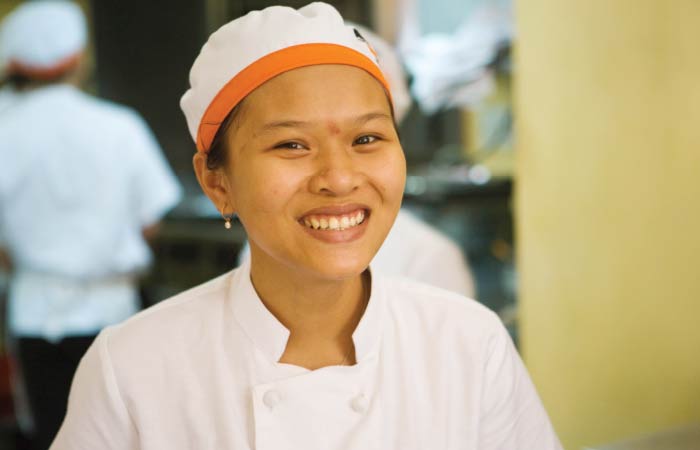
The students are vulnerable, often orphaned young people who spend 18 months at the campus in a free, comprehensive culinary and hospitality training programme.
The founder’s business acumen has assured STREETS is a mostly self-sufficient charity, no doubt boosted by its top ratings and ‘Certificate of Excellence’ on TripAdvisor. Social enterprise or not, chances are you’ll still enjoy your meal at the restaurant.
It also includes an administrative office, a 16-computer language lab and ‘Oodles of Noodles Center’ where trainees teach tourists how to make a variety of the region’s famous noodles.
Away from the front-of-house and back-of-house work, the participants are given clothing, housing, medical care, a small monthly allowance and all the social support they need to help make the transition from a life of hardship to a coveted job in the hospitality and tourism industry.
Bermas says there’s “100 percent employment upon graduation”, with most earning placements at five star resorts such as the InterContinental Danang and Park Hyatt Saigon, and that the scheme ultimately gives the young adults “dignity in their lives”.
Such a time-consuming venture has left Bermas little time for his own family. Although he came to Vietnam with a partner who contributed to STREETS’ launch, Bermas has no children. Well, he says he has “150 Vietnamese kids”, but, when probed more closely, what he represents to the trainees is a layered role model.
“(The trainees) certainly see me as leading the charge and being committed to improving their lives, but we’re teaching about independence and self-sufficiency, not about childhood and being dependent on our parents.
“I think people want to see me as being a warm, loving father because there’s something romantic about that notion, and I am warm, loving, caring, and I cry when they have problems.
“But it’s our ability to be so much more ambitious in what we’re doing than others have been because we’ve come through thinking what’s really important for them, not for us.
“Obviously, I wanted to do this because it’s an area I have expertise in. There’s something not at all controversial or political about helping a poor kid. Their lives are challenged not through any fault of their own.”
Deciding whom to offer an opportunity that not only changes the person’s life for the better, but their family’s lives as well, is understandably a tough process.
 Applicants have to be aged 16 to 22 and at a sixth grade educational level (for ages 11 to 12), have an interest in the programme and learning English, and be very disadvantaged.
The latter may mean being an orphan, or living in a home without indoor plumbing and no possibility of economic support from anybody in the family.
The rigorous selection process begins with a sprawling network of government representatives, community leaders, and religious heads, including Buddhists and Catholics, who nominate about 125 applicants per class.
Those shortlisted are visited and interviewed at least twice and then a class of around 25 trainees is chosen.
Securing some of the prospective students has led Bermas far beyond the hospitality sector and deep into the unscrupulous exploitation of the desperately poor.
One of the trainees was sold into human trafficking by his father. A ‘rescuer’ contacted STREETS to set up a meeting with the father in a bid to save the youngster.
“I could not imagine what that was going to be like, how I would sit across from a father who sold his kid,” says Bermas.
The father, a subsistent fisherman, told how he was unable to feed his family and had been genuinely duped into thinking his son was being sent to learn a trade.
“Then the father began crying, begging we would take his son into the programme and not compound the terrible, tragic mistake he had made.
“We hugged at the end. If you asked me the night before, I would have said I’d be so enraged, I’m not sure I could deal with him. To have that meeting and hug, that is an incredible, life-touching experience.”
Another graduate, Dinh Thi Linh, 22, comes from a poor mountainous area of the central Quang Nam Province. Since graduating from STREETS, she has worked at the Hyatt Regency Resort and Spa DaNang as a dining room and poolside server.
“STREETS is like a fire to guide me in the darkness,” she says. “I can not imagine how my life would be without (it).
“It is an amazing place for disadvantaged youth because STREETS did not only teach me about language or hospitality skills but also taught me how to be a good citizen. All my thankfulness to STREETS.”
Many graduates who work near STREETS visit the restaurant after finishing their own shifts. They see the team as family.
That family may expand to Saigon this year. Bermas is scouting for locations in District 1 so STREETS can open a new restaurant and tap into another lucrative tourist market, creating more opportunities for disadvantaged youngsters.
Envisaging a global STREETS brand, he adds, “We want to take the model that we’ve developed and teach the lesson that kids have potential, regardless of how difficult their backgrounds are, and their potential largely relates to what our expectations are for them.”
Visit streetsinternational.org.












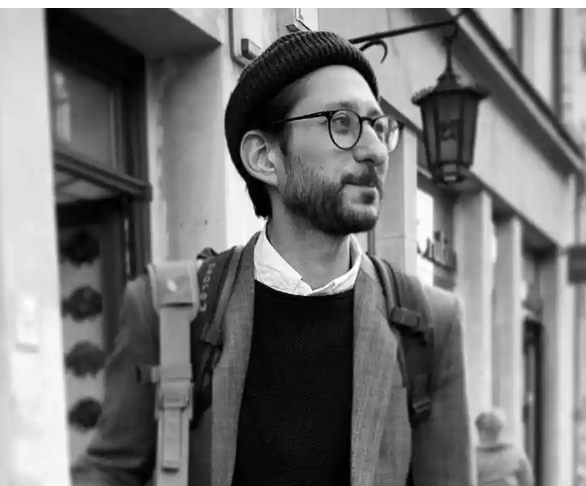







 Lorcán Lovett