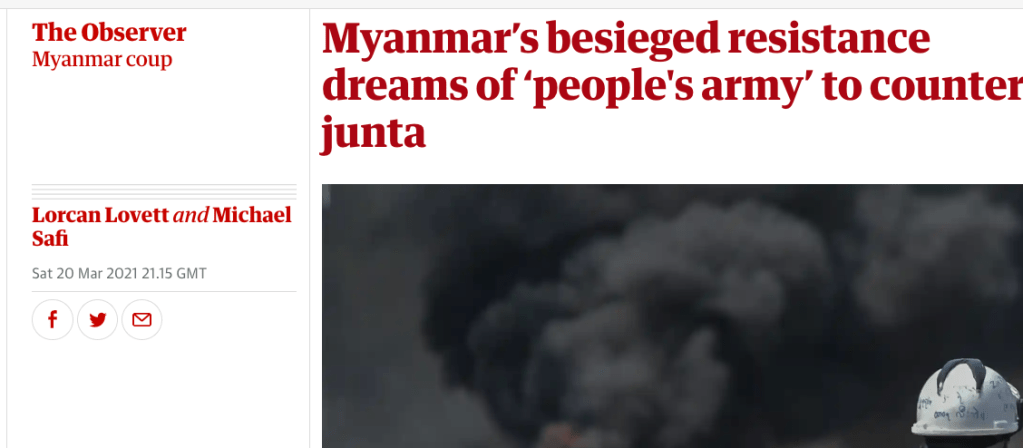
On the barricades and in border hideouts there is a growing mood to take the fight to the military after the coup that has left more than 200 dead.
As an adolescent, Aung, 27, wanted to enlist in the Myanmar military until his family spelt out the horrors of the institution. Now, he has seen them firsthand.
“I hate them,” he says from an underground location in Yangon, where volunteer medics practise dragging victims of gunshot wounds from danger.
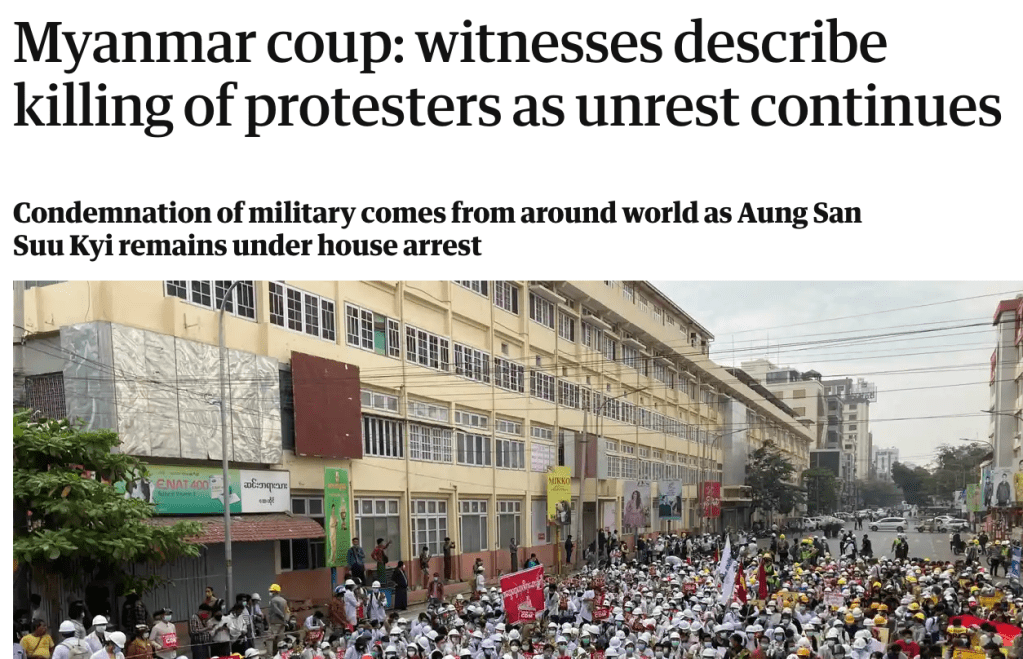
Days after the military seized power from an elected government on 1 February, peaceful demonstrators gathered across the country with expectations of bloody slaughter at the hands of the troops. Their fears came true, with police officers dancing as they picked off unarmed civilians while their superiors in the army unleashed terror on residential neighbourhoods.
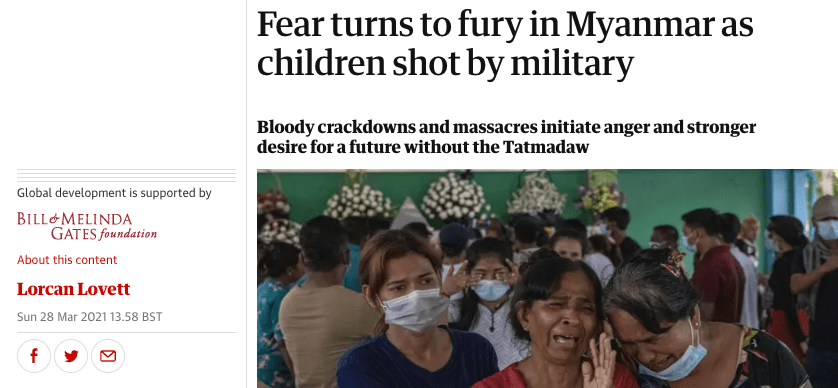
Security forces had killed at least 217 people as of Wednesday, according to local monitoring group Assistance Association for Political Prisoners (AAPP), including last week a middle-aged man who was killed in the street while collecting rubbish, and a 16-year-old girl at a friend’s home who was shot by a sniper, according to local media.
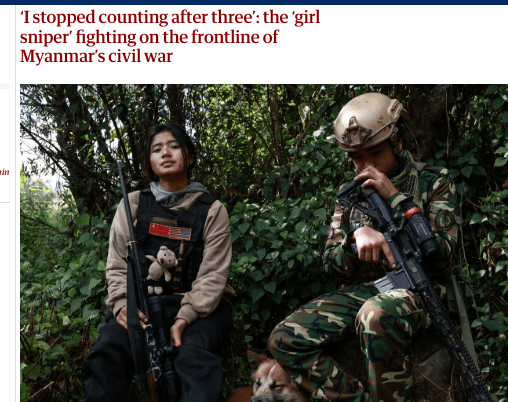
Protesters say their calls for serious international intervention have fallen on deaf ears, and warn that the struggle for democracy has entered a darker phase. Black flags flutter above makeshift barricades, signalling a willingness among the demonstrators to fight back, and calls are growing for a “people’s army” to shield civilians from Myanmar’s armed forces, the Tatmadaw.
Younger protesters are using YouTube to learn gun preparation and shooting, according to Aung.
“Yangon looks like a war zone, except only one side has weapons,” he says. “That’s why we need an army. We will have to train and fight at the same time; we have no time left.”
Hlaing, 30, has been encouraged by the Committee for Representing Pyidaungsu Hluttaw (CRPH) – Myanmar’s parallel civilian government – which has labelled the regime “terrorists”, told civilians to defend themselves against security forces and has met several of the country’s ethnic armed groups. On Thursday, a CRPH representative said the body was exploring ways to hold the military to account, including at the International Criminal Court.
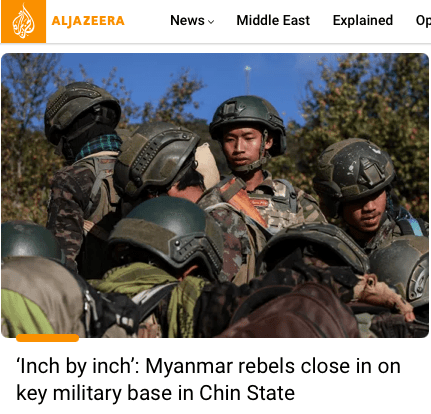
At least two ethnic armed groups in Myanmar’s borderlands are known to be sheltering politicians, activists, journalists and striking civil servants who have fled the regime.
“I would support the CRPH if it decided to form an army,” she says. “I would force my husband and brother to join, but I need to look after my kid.”
Calls for a federal army are not limited to protesters in Yangon. A nationwide mobile internet shutdown has made communication difficult, but many of those across the country who can access wifi talk on Facebook about the need to incorporate ethnic rebel groups into the wider anti-Tatmadaw movement. Hiding their real names and profile pictures, they urge ousted elected officials to build an army that would finally end the military, which, dominated by the Bamar ethnicity, is often cited as the source of the country’s major problems.
A shield-like seal for the proposed federal army has been circulated on social media, with 14 stars representing Myanmar’s states and regions and seven red lines symbolising principles, including political impartiality, ethics and service to a civilian government.
Last Sunday Hlaing watched from her home as protesters fell to the junta’s bullets metres away.
“We couldn’t do anything about it,” she says. “Then at night they kidnap people. We don’t need this army or police any more, but there will be a civil war to get rid of them.”
Beating the Tatmadaw would be no easy feat – it has an estimated 406,000 soldiers and dwarfs any of the country’s ethnic rebel groups that it has warred with for decades.
But Zaw, a salesperson whose only combat experience has come from weeks of dodging violent crackdowns in the protests, says there is no choice but to fight for democracy “otherwise they will never give it to us”.
“We have lost hope that the UN or any kind of army will come to help us,” the 29-year-old says. “We should have a federal army that includes all ethnic people around our country. There’s more of us and the soldiers would give up. The people’s army will become the new Tatmadaw.”
David Mathieson, an independent analyst who specialises in Myanmar, said he had heard reports of people fleeing to border areas that were rife with armed groups, leading to speculation that some were receiving weapons or training.
“It’s very hard to get numbers and a lot of people are hiding, it’s a mix of people fearing arrest or who have been arrested, released and have decided not to stick around,” he said.
“But [the militias] are overwhelmed with a military occupation as well so they don’t necessarily have the resources to arm or house or feed the growing numbers of people turning up there.”
A successful armed resistance would probably require defections of military or police units who brought over their weapons, he added.
Ethnic minority groups had launched formidable insurgencies in the country over the past decades, but in this case, Mathieson said, “I think it’s way too early to tell.”
Dr Zaw Wai Soe, a CRPH member who heads three ministries, posted on Twitter on Thursday that a “federal union along with a federal army will arise”.
After the brutal suppression of the 1988 pro-democracy uprisings, many students fled to the jungles to receive training from ethnic rebels, but their hopes of overthrowing the Tatmadaw were crushed by betrayals, disease and a dearth of supplies and equipment.
Demonstrators guarding a sit-in protest with homemade shields in a Yangon neighbourhood were willing to try an organised armed resistance once more. One protester said all they had was molotov cocktails and fireworks to defend themselves.
Moving awkwardly while wearing plastic body armour as he helped build a wall of sandbags before the next attack from soldiers, he said: “If the CRPH formed an army, I would join it.”
Some names have been changed






 Lorcán Lovett