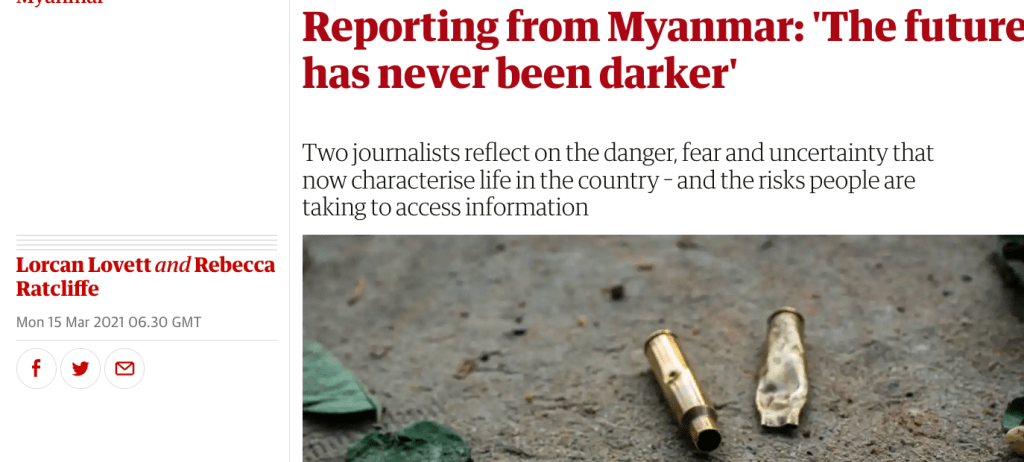
Two journalists reflect on the danger, fear and uncertainty that now characterise life in the country – and the risks people are taking to access information
‘It is strange to write about joy amid the daily killings’
It started with people nervously waiting outside a KFC for the first brave activists to shout “let the junta fall” before fleeing police down alleyways. Within days, almost everyone was on the street chanting for democracy in a show of unity rarely seen in Myanmar. Now the gnawing dread hanging over those mass demonstrations has materialised – headshots from snipers, ransacked newsrooms, squads of soldiers inflicting terror in the night. The country’s future has never been darker and, once again, it has come down to the bravest to lead the fight against the military coup.
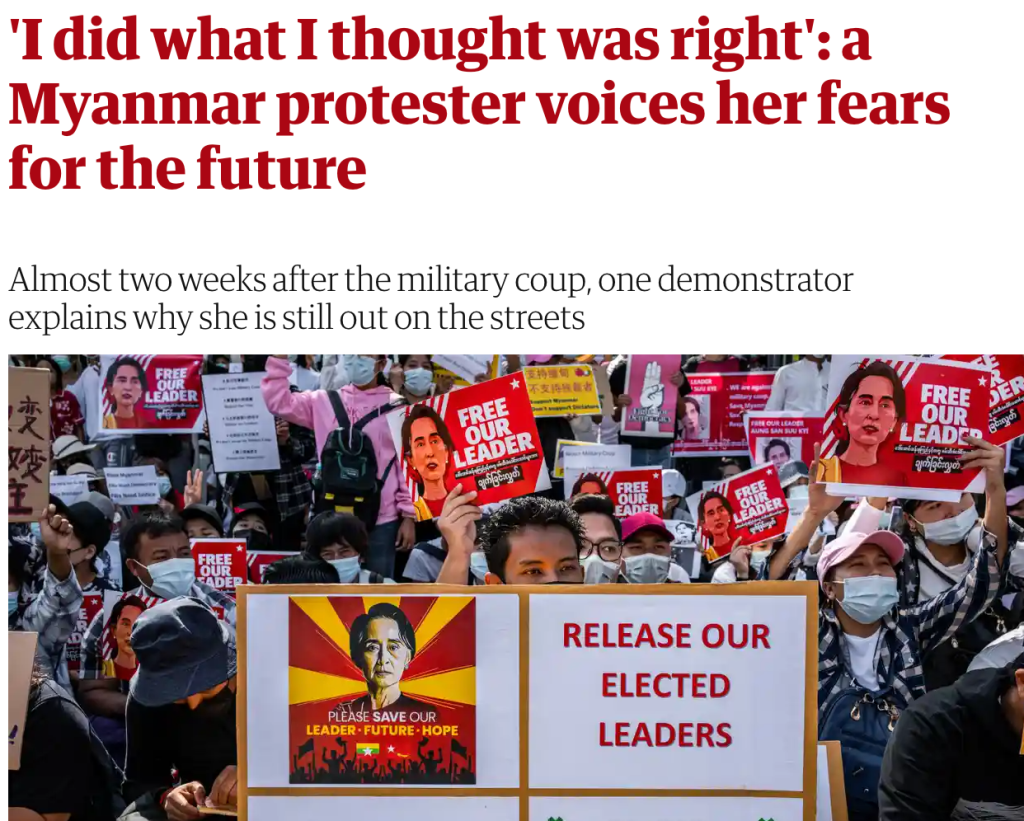
It is strange to write about joy amid the daily killings, but about a week after the power grab on 1 February, the mood in Myanmar’s biggest city, Yangon, was celebratory. Hundreds of thousands coming together provided psychological relief from the long-feared military, or Tatmadaw, through songs and speeches. Street vendors sold caps with TikTok logos Gen Z demonstrators, the homeless enjoyed free noodles, and topless bodybuilders paraded down thoroughfares demanding the release of Aung San Suu Kyi.
One young demonstrator told me she worried that people were “coming out just to have fun”. “We need to focus on what’s happening,” she said.
Her words came after the Tatmadaw had already blocked the internet for 24 hours. I had to report the first major protest by texting a friend whose SIM worked. She then called editors abroad, describing the tens of thousands marching defiantly against a brutal institution that had previously cut them off from the world for decades.
While at the protests, I would carry the usual essentials in my rucksack – water, a power bank, a charger, hand sanitiser. But the list has grown to include my passport, a change of clothes and more cash in the event that I can’t return home.
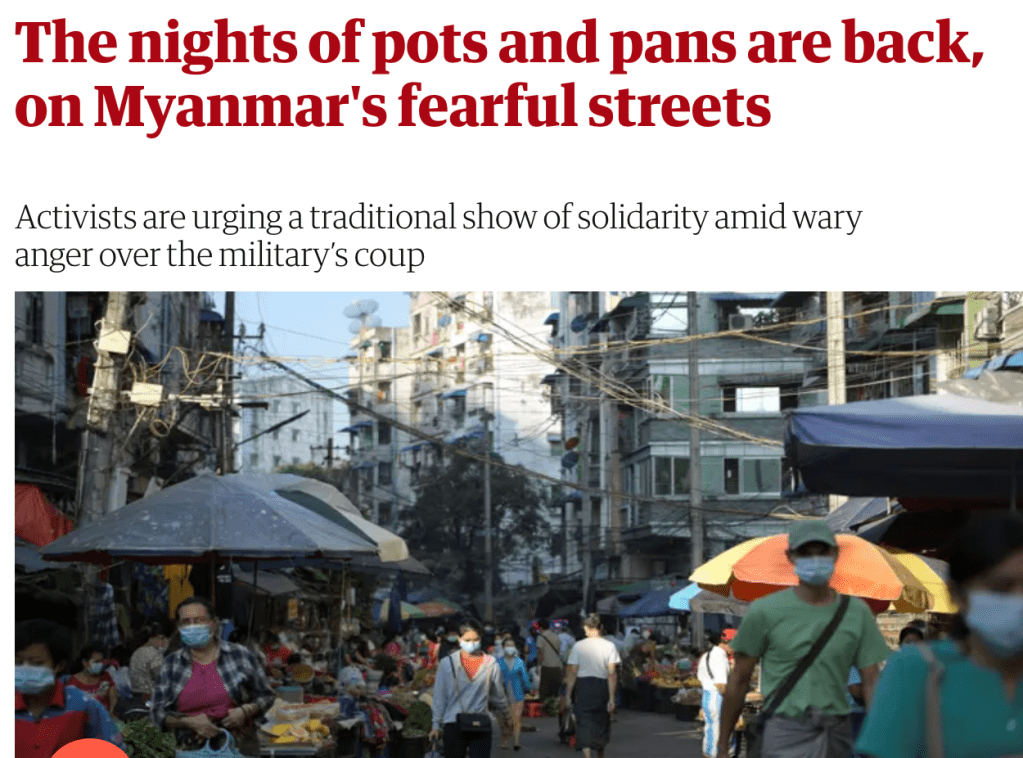
These days living in Yangon can be as dangerous as reporting from here. All that peaceful energy summoned to support an elected government was met with bullets and now the protests have dwindled. At night, lights flicking off in densely stacked streets mean the soldiers have arrived, then flashlights crawl across balconies, and rows of cars may be smashed. The troops wear red armbands with a white star and between their surgical masks and netted helmets their eyes are visible. Wielding truncheons and guns, they fire shots at homes, break in and take civilians away. They have become the bogeymen of this occupied city and they revel in it.
Children have nightmares about the men in green, but during the day they play protester games between the apartment blocks, building mini versions of the makeshift barricades that disrupt police movement at intersections. Everyone asks what Myanmar’s ethnic minorities have been saying for decades: why should a country have an army if all it does is beat and murder its own people?
Despite risking torture and jail, residents are quick to shelter protesters hiding from security forces. As the regime has introduced a series of ridiculous laws, an understanding has developed that people can be jailed for anything. As the British author Christopher Hitchens wrote, tyranny is defined not by its regularity but by its unpredictability and caprice. Following the rules doesn’t mean you can relax – you can always be found to be in the wrong.
Rumours are constant, the most recent one concerning a mass exodus of military-connected families from the city to the military nucleus of Naypyidaw because parts of Yangon “would be bombed”. Sometimes you feel like laughing at these rumours, but the thought that wild talk can sometimes be true (although not in this case) stops you.
People depend on reporters to debunk these rumours, but they have become the military’s next target. Dozens of journalists have been detained and three newsrooms have been raided in just two days. Hundreds of protesters have been arrested; their fate is unknown.
That is not to say the battle for democracy is over. A growing nationwide strike that includes civil servants is crippling the military’s administration, while the people of Myanmar continue to show a resilience that has captured the world’s admiration.
They do not think the country needs another diminutive general with a pudgy face who thinks he knows how to run things. The face of General Min Aung Hlaing was taped to the asphalt for children and adults to stamp on, and soon his face covered roads everywhere. Troops picked off the paper, so people brought out stencils. Now you can be jailed for such shows of defiance but his face, underneath an oversized hat, is still being trodden on.
Lorcan Lovett in Yangon





 Lorcán Lovett