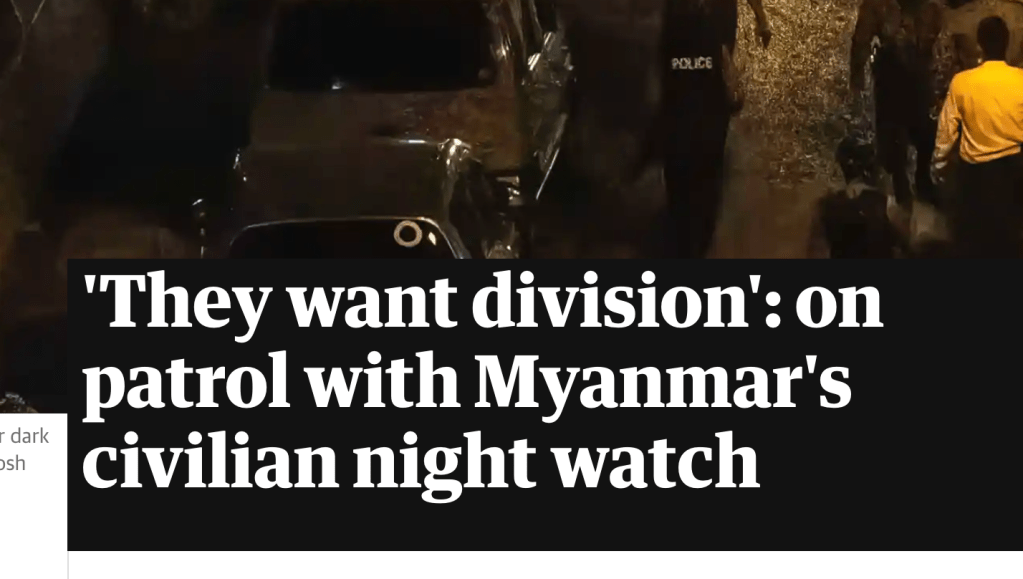
Since the coup, people in Yangon have been patrolling the streets to protect neighbours from overnight military raids and criminals
Sitting next to a makeshift barricade of bamboo and recycled metal, Aung Than, 30, a tour operator, says he is ready to die for his street. “A life on this street is worth more than mine,” he says. “I am ready to exchange my life to protect them if it comes to that.”
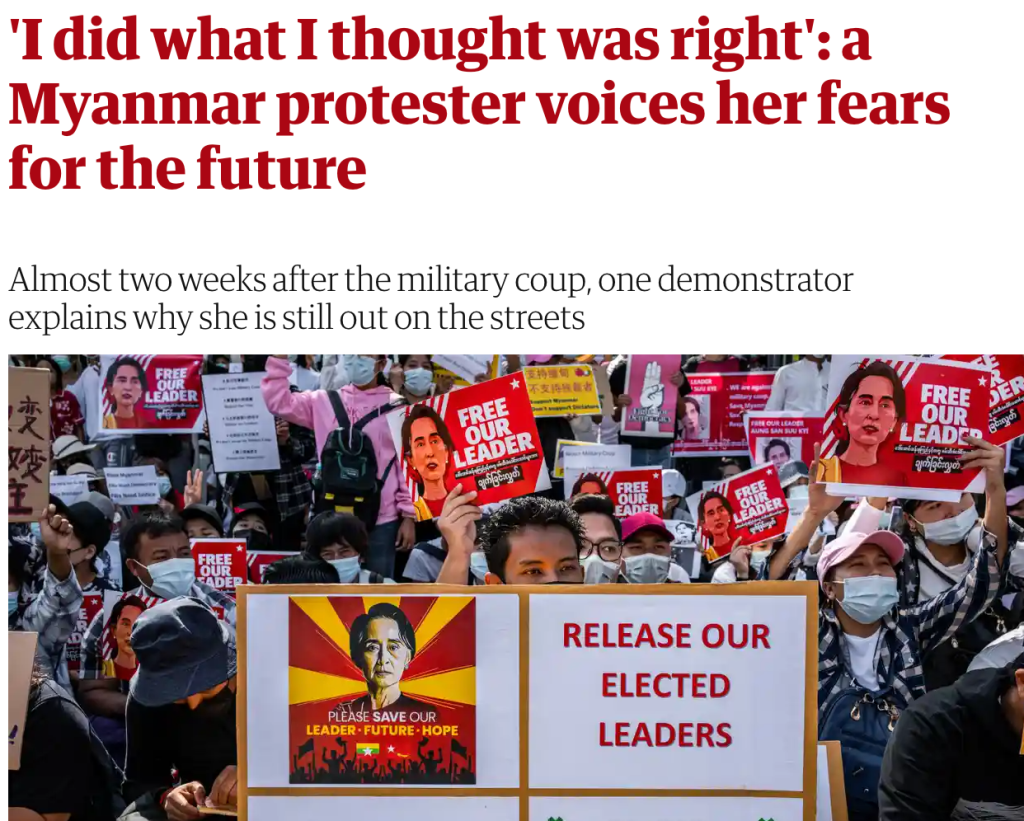
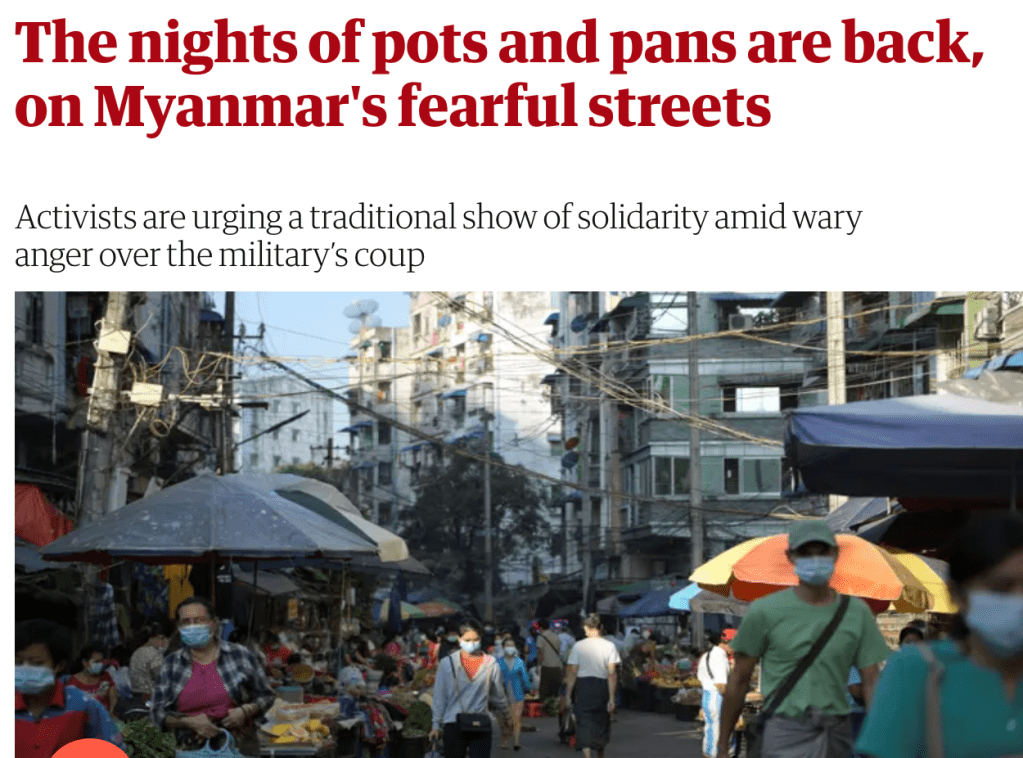
Protests against the 1 February coup have grown in recent days in Myanmar’s biggest city, Yangon. Meanwhile, nights are filled with an eerie silence, punctuated by bursts of clashing pots and pans in support of the detained civilian leader Aung San Suu Kyi, and the clamour of mobs chasing down lone figures.
With police apparently on the side of the coup government, and soldiers deployed on the streets of some cities, residents in parts of Yangon have taken protection into their own hands. Community defence units have sprung up in many areas, carrying makeshift weapons to keep watch overnight as part of a growing peaceful resistance movement against the military.
When civilian leaders were arrested two week ago, residents began banging utensils as a symbol of driving away the “evil” of the Myanmar military, which seized power from the democratically elected government and jailed Aung San Suu Kyi on a charge of illegally importing walkie-talkies.
As the military tightened its grip, the cacophony would erupt when police entered neighbourhoods around midnight to arrest dissidents.
On Friday last week, after days of escalating demonstrations against the coup, the military ordered the mass pardon of more than 23,000 prisoners. Their release on to the streets has been accompanied by a wave of unverified reports of arson, smashed cars and poisoned water tanks.
Fear and rumours are gripping communities across Yangon and the country. On Sunday armoured vehicles rolled into the city and the internet was inexplicably cut for eight hours overnight. Hardware stores reported being busy with purchases of wooden sticks, rods and anything else that could be used as a weapon.
Aung Than, who was on his second 8pm-to-4am night watch shift, believes the military is under increasing pressure because public servants have joined strikes against the coup, paralysing government functions and complicating the junta’s attempts to paint its takeover as a lawful intervention.
There are fears the military could try to force civil servants to work by intimidation or worse. “We want to protect government workers and their families in this area that the military may target,” Aung Than said. “The strike is an important part of the civil disobedience movement.”
The previous night a resident confronted two strangers who had approached their street. The pair ran away, followed by a 20-strong mob that included teenage girls in Pokémon pyjamas carrying metal poles. Only one resident reported seeing the men, who were never found.
In Yangon’s Sanchaung township, one night watch detained four men who said in a video that they had been paid to join a protest and break into homes at night. They did not disclose who had paid.
Some of those detained have been photographed with bloody faces or had their eyebrows shaved to brand them as criminals. But residents say they are feeding those they capture, treating them well and releasing them after questioning.
“The people who have been caught are being held against their will and have been told to do something against their will,” said Aung Than. “They do not know what is going on, so once they answer our questions, we would send them back to their families.”
As the night wears on in Yangon, Aung Than’s mother brings out egg fried rice as six men survey the sky for drones that other residents have reported. A ringtone that sounds like metal clashing triggers a brief panic, and when a light signal from the upper block is interpreted as the military arriving, the men hide in the dark behind parked cars.
They are vulnerable to detention for staying out past an 8pm curfew, says an electrician who joined the night watch out of concern for his wife, mother and young child. “The military wants people to be in turmoil and worried so they can control their hold on them,” he says. “But the response has created more coordination and deepened bonds between people. The military wants division but we are not going to jump into the trap they have set.”
As they return to the soft drinks and snacks at the barricade, the older men tell their young neighbours of the brutality that followed a nationwide uprising for democracy in 1988. The military ruler at the time, Ne Win, ordered troops to kill demonstrators, they say, adding that the current leader, Min Aung Hlaing, will also be overthrown owing to his neglect of the people.
But not everyone is happy with the civilian watch groups. “It’s just these days we get no sleep,” says a taxi driver on his way home. “The pots and pans are banging three times a night.”











 Lorcán Lovett