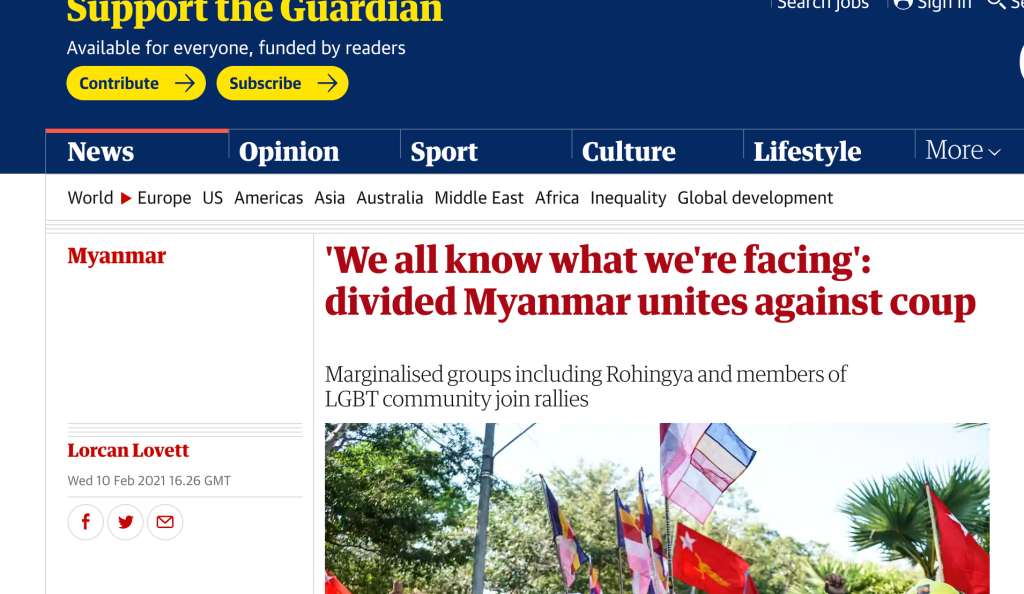
The Myanmar military took power last week on the promise of “restoring eternal peace” to a country riven by seven decades of ethnic conflict. Since the takeover it has made remarkable progress in uniting the deeply divided country against a common enemy: itself.
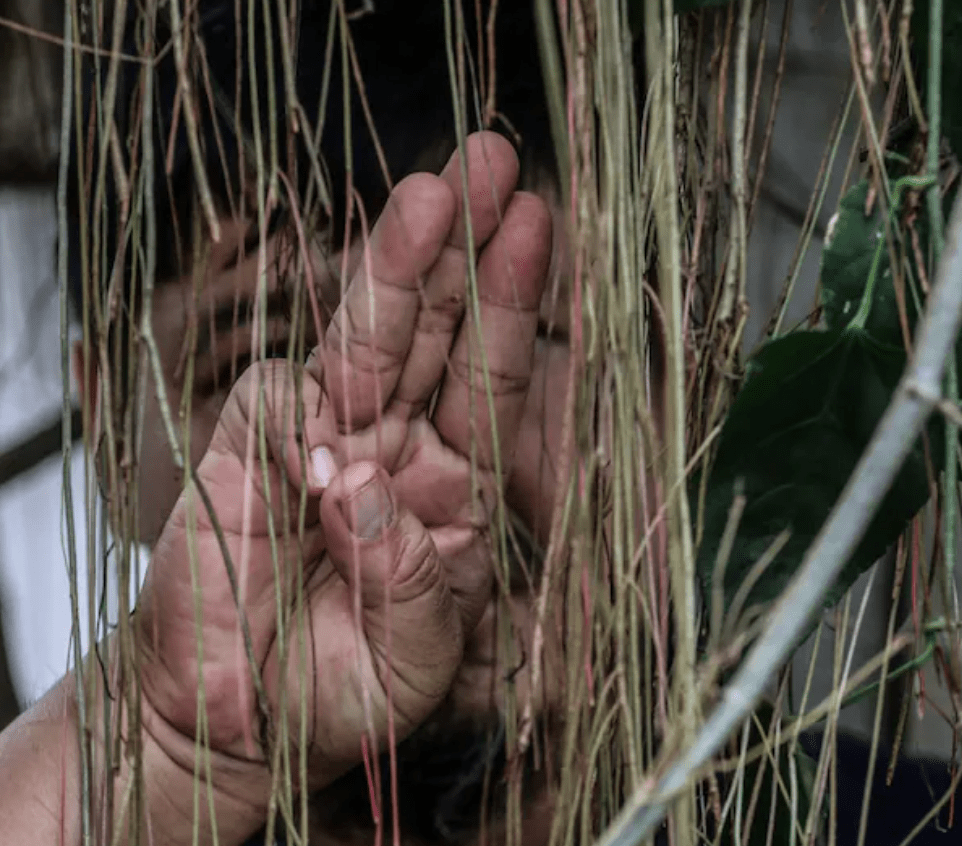
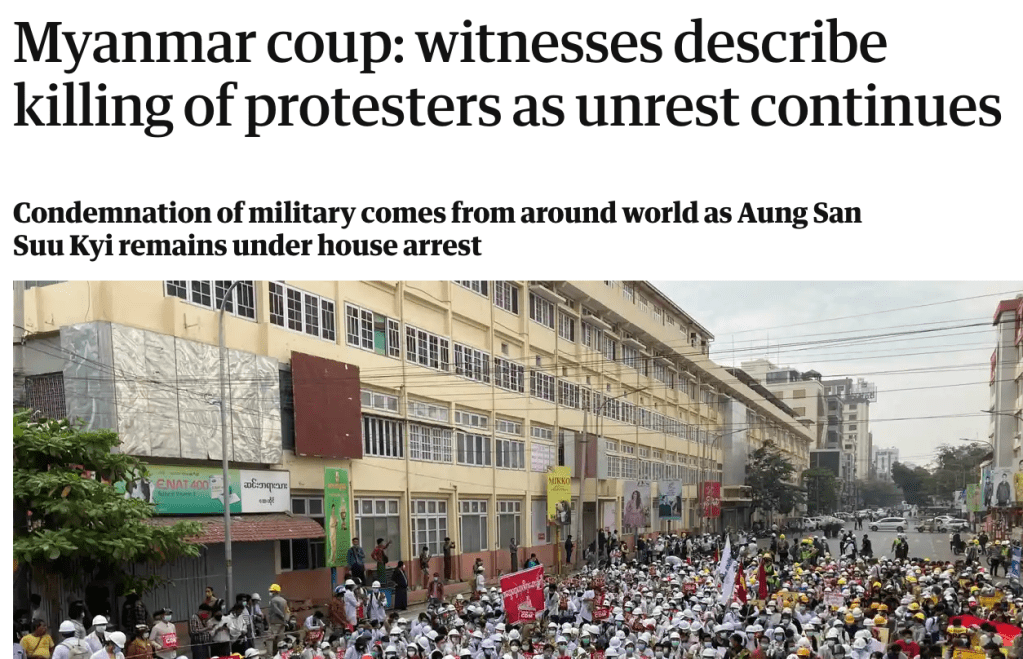
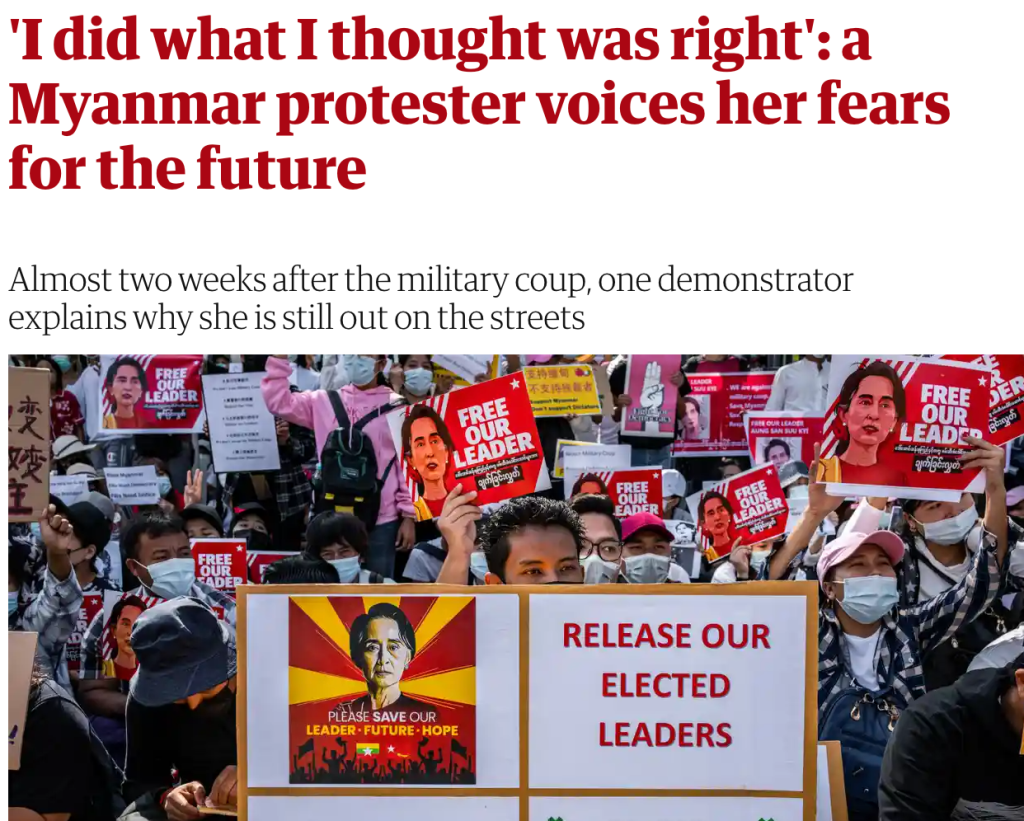
In Myanmar’s biggest city, Yangon, strangers greet each other with the three-finger salute – a symbol of resistance against the regime – and trucks offer free rides for demonstrators. Neighbours cook chickpea curry in big vats on the streets to dish out to passersby, and volunteers distribute refreshments to keep people hydrated under the hot sun.
Protesters of all ages and backgrounds have taken to the streets, including beauty queens, shirtless musclemen, cosplayers and snake owners along with their scaly pets. Marginalised groups have also joined rallies, among them LGBT members who say the mass gatherings present a path for their future acceptance.
“People on the marches tell us we should have our rights,” said Min Khant, 21, a Yangon drag queen whose stage name is Walkie Talkie. “They are proud of us. LGBT are protesting in their heels and waving rainbow flags across Myanmar.”
Myanmar still has a colonial-era anti-sodomy law and, although more publicly gay figures and Pride events have pushed progress, discrimination remains common.
Min Khant, who applied his skills as a makeup artist to prepare his friends for the demonstrations, said the mass struggle against military dictatorship “will make us more accepted”.
“We all know what we are facing,” he said. “We ask that the world helps us.”
During the marches on Wednesday, the drag queens were met with applause.
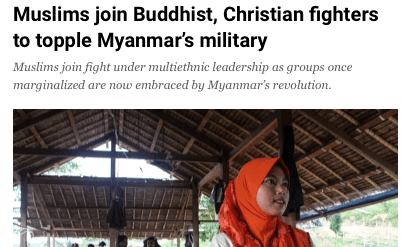
Meanwhile, in the south-east coastal city of Mawlamyine, Kyaw Minn Htike, 25, broke one of Myanmar’s biggest taboos by protesting openly as a Rohingya – the predominantly Muslim minority from Rakhine state subjected to a brutal 2017 crackdown by the Myanmar military that human rights lawyers have described as genocide.
Rohingya are widely seen in Myanmar as interlopers from Bangladesh, and labelled “Bengalis”. However, Kyaw Minn Htike said his group had received “no bad reactions” when they waved signs reading “We (Rohingya) Stand for Democracy”.
“The majority of people realise that in a national crisis these marginalised communities came out to the frontline,” he said. “That’s the citizen spirit. After the protests I believe there will be better unity between the majority and the minorities.”
When Aung San Suu Kyi personally defended the military against accusations of genocide at the International Court of Justice in The Hague in December 2019, crowds gathered in Myanmar’s cities to support her. But many Rohingya, rather than hold this against her, have called for her immediate release from military detention, as well as the release of other National League for Democracy (NLD) leaders.
“Defending or blaming the Tatmadaw [military] and accepting the Rohingya community are two different issues,” said Kyaw Minn Htike. “Although Rohingya youth activists have been well accepted during this crisis, there is still a big chunk of the population that have negative views on the Rohingya, especially when it comes to citizenship or being accepted as a national ethnic group.”
Another ethnicity that has suffered greatly because of military campaigns, the Kachin of northern Myanmar, have demonstrated against the coup in cities throughout the country.
A 32-year-old Kachin education researcher based in Yangon, who asked for anonymity, said minority ethnic groups were initially reluctant to join protests because of the abundance of NLD flags and chants. People in some borderland areas are suspicious of the party due to criticism that it has failed to deliver ethnic rights and federalism reforms.
“Most ethnic armed organisations think they will never be acknowledged, either under NLD or military leadership,” she said. “But the majority of ethnic people, including me, accept that the country will be worse under military rule.”
If the NLD does return to power, she added, it would give more opportunities to minority ethnic people in future.




 Lorcán Lovett